Tamiya Top Force Evo Project
Page 1: Assembly
The Top Force Evo uses the DF-01 chassis which was previously
used on
the Manta Ray and then enhanced on the Top Force. I've written
about both of those before so I'll only discuss the differences
here. See my Manta Ray page and my Top Force Page for additional photos and build details.
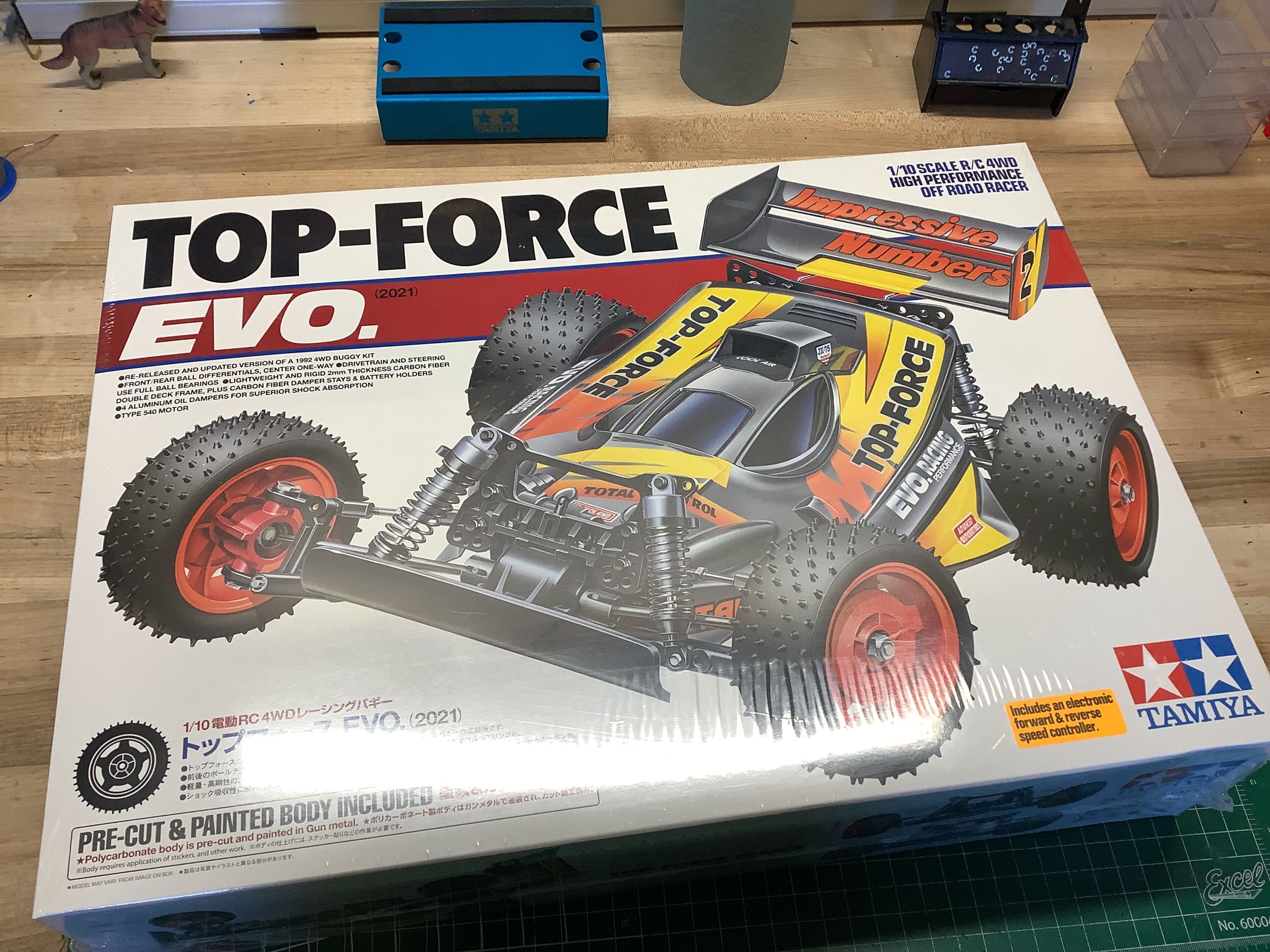
The Top Force Evo comes in a box with lovely traditional box art, though
it has obviously been updated with the Evo branding. There are no
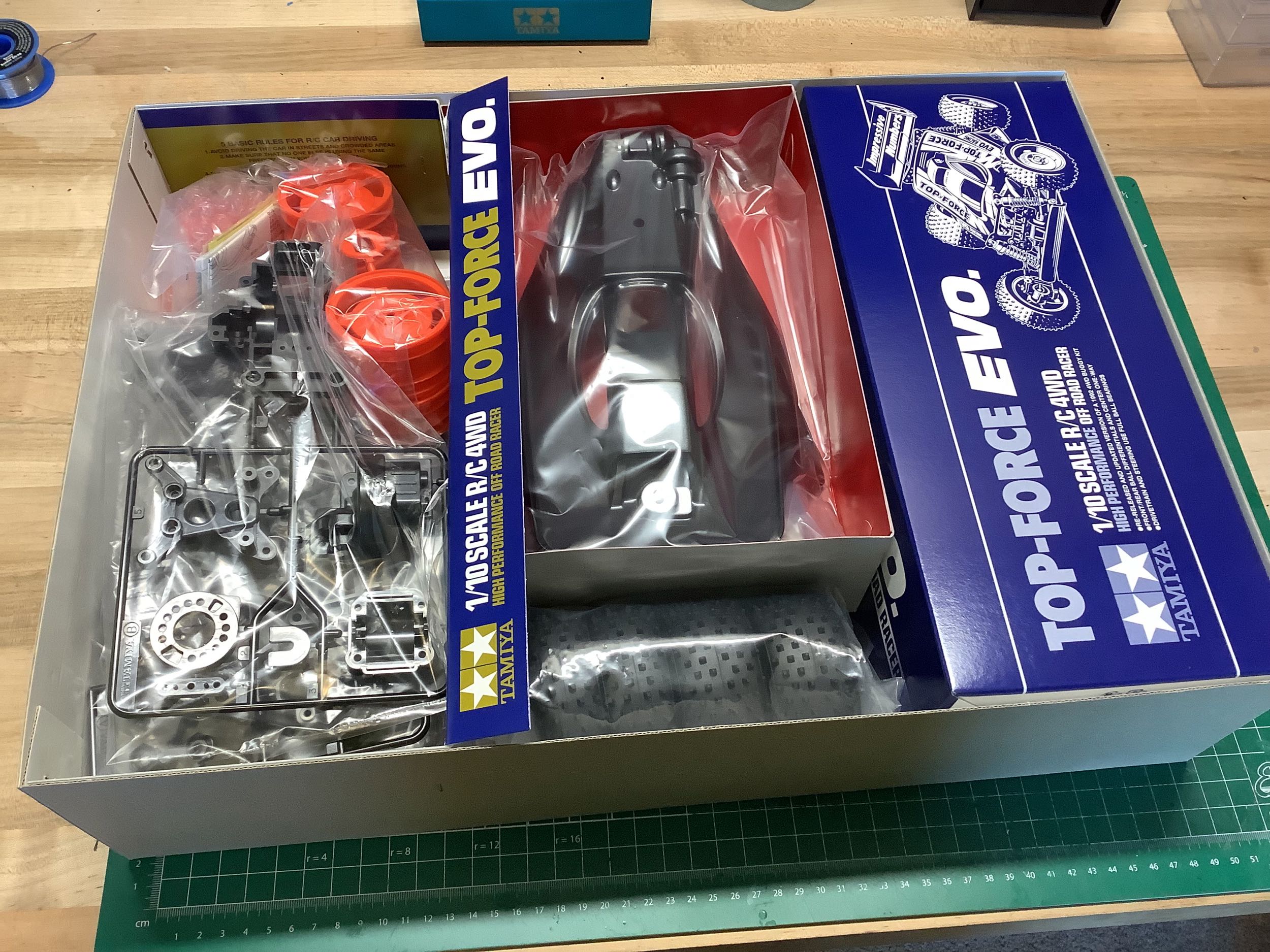
blister packs inside, but the contents are still nicely
presented. This particular edition comes with a body that is
pre-cut and pre-painted.
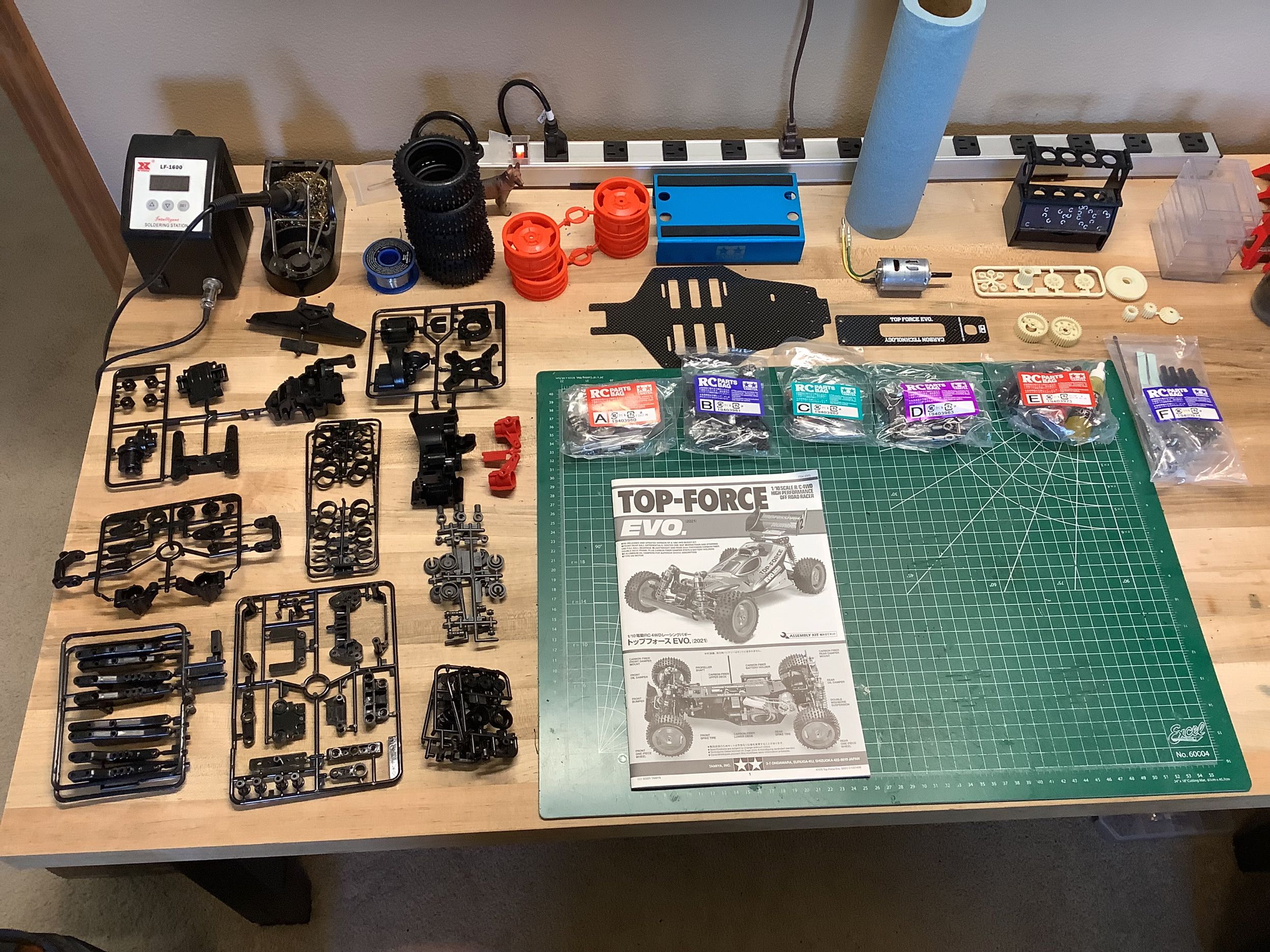
The contents of the model are arranged on my build table. All of
the hardware comes in six sequentially labeled bags. The lovely
carbon chassis plate is visible at the top of frame.
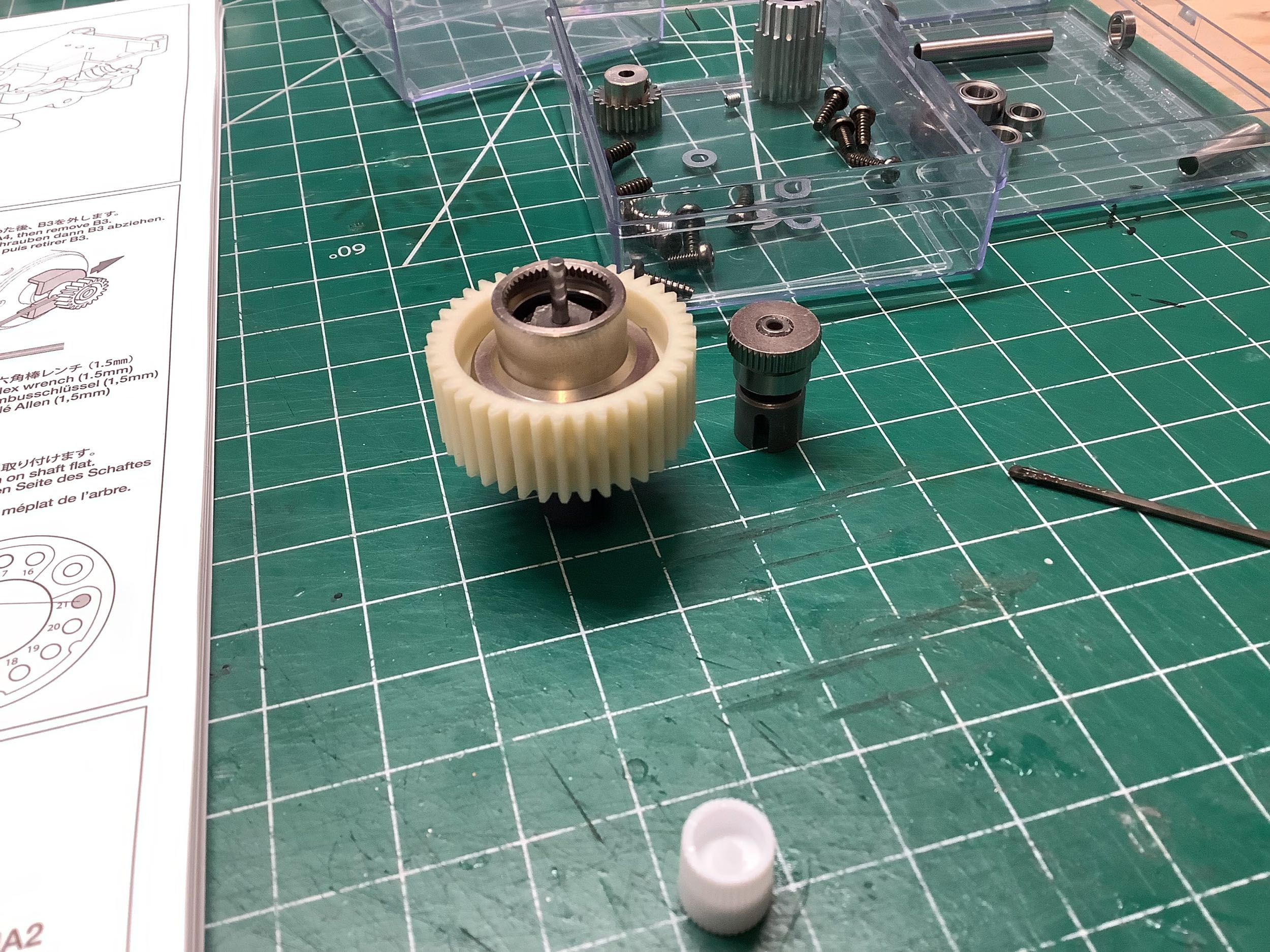
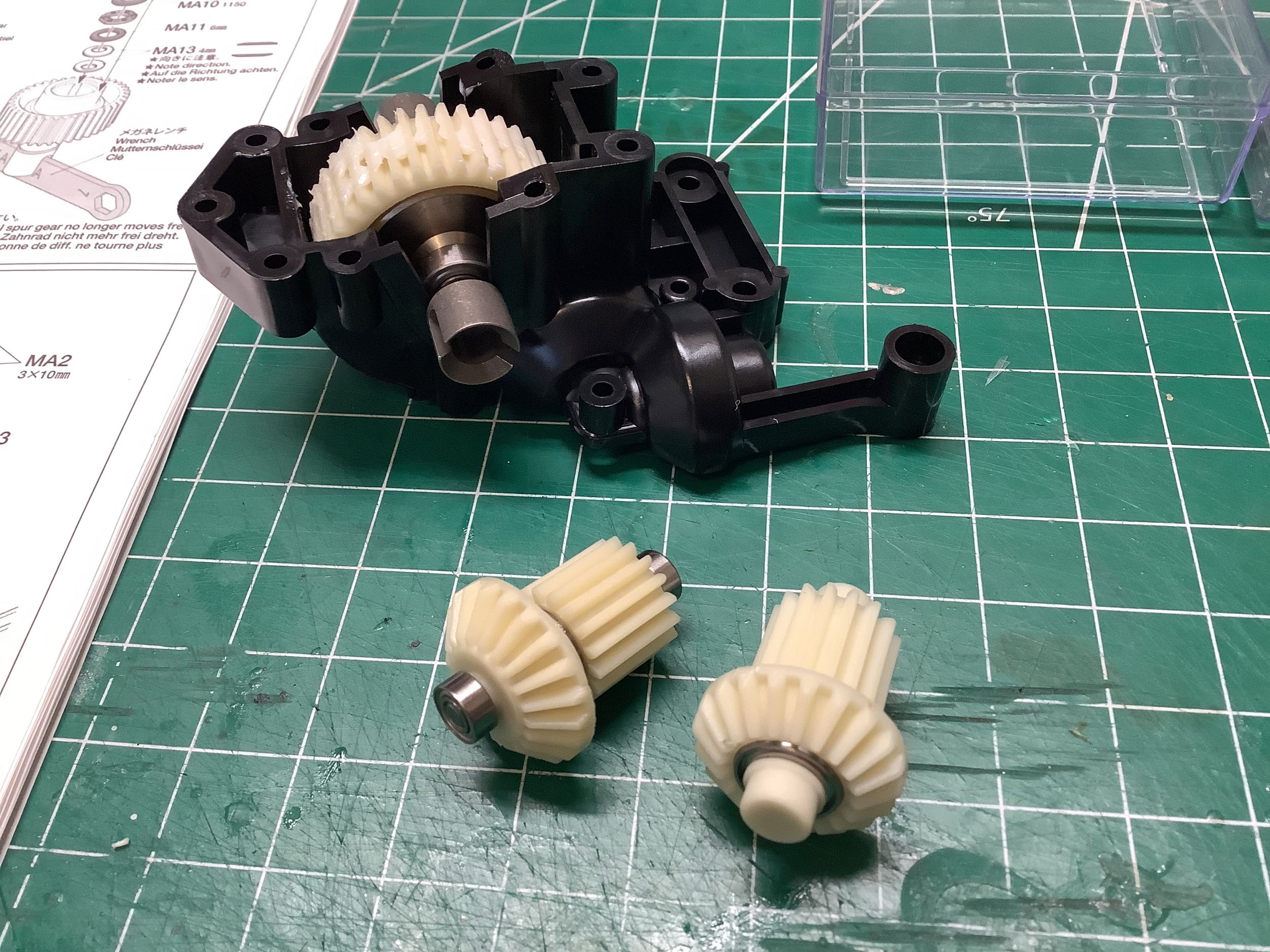
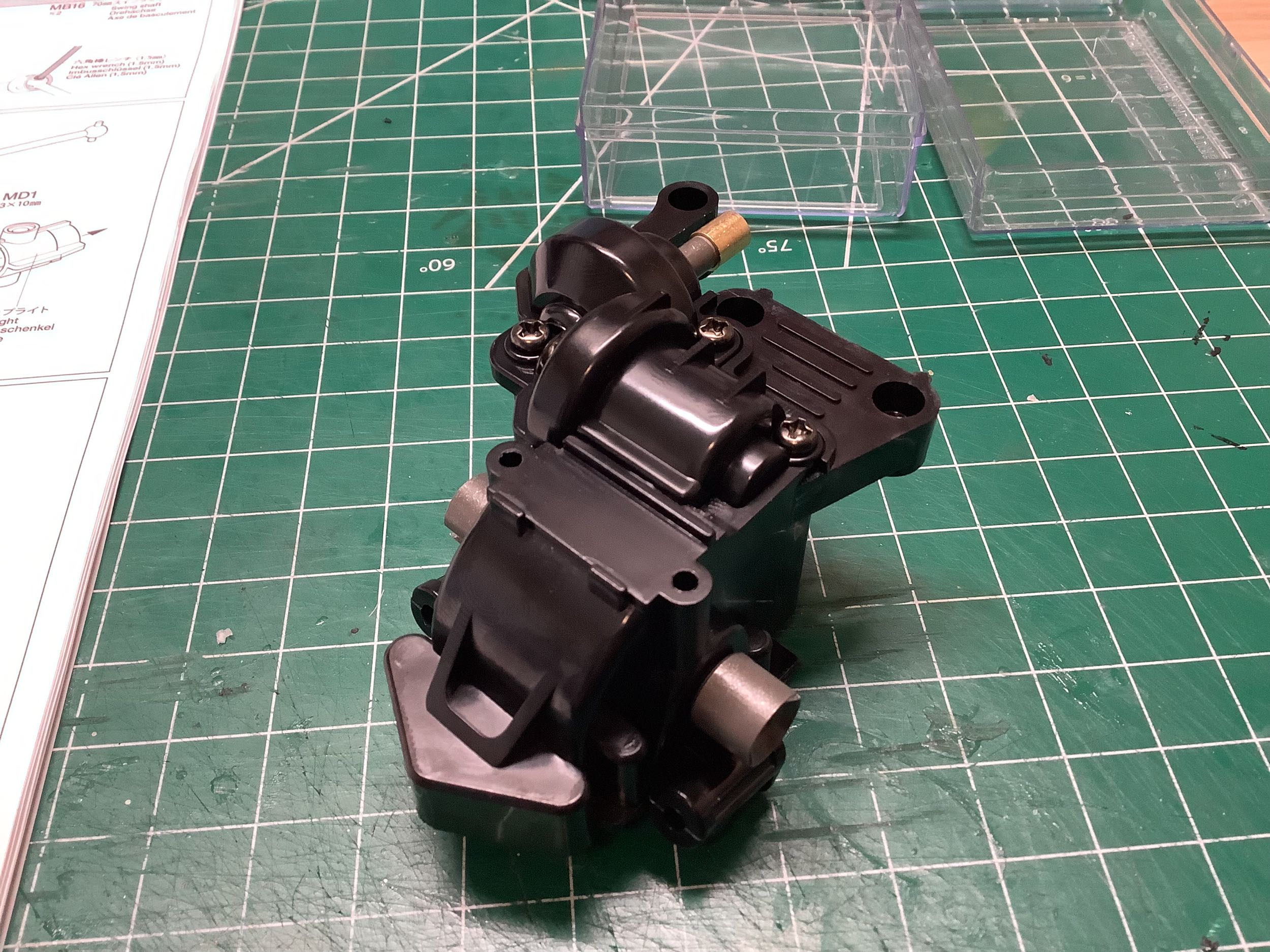
Both the Top Force and the Evo use the same ball differential, but there
are subtle differences. Where the Top Force had a hexagonal
recess to connect the pressure plate to the cap, the Evo uses a splined
connected as you can see on the left. This requires a few unique
and specialized parts, but it looks like the original Evolution model
used the same design. It's not obvious what the advantage of this
design is supposed to be. The Top Force Evo uses ball bearings
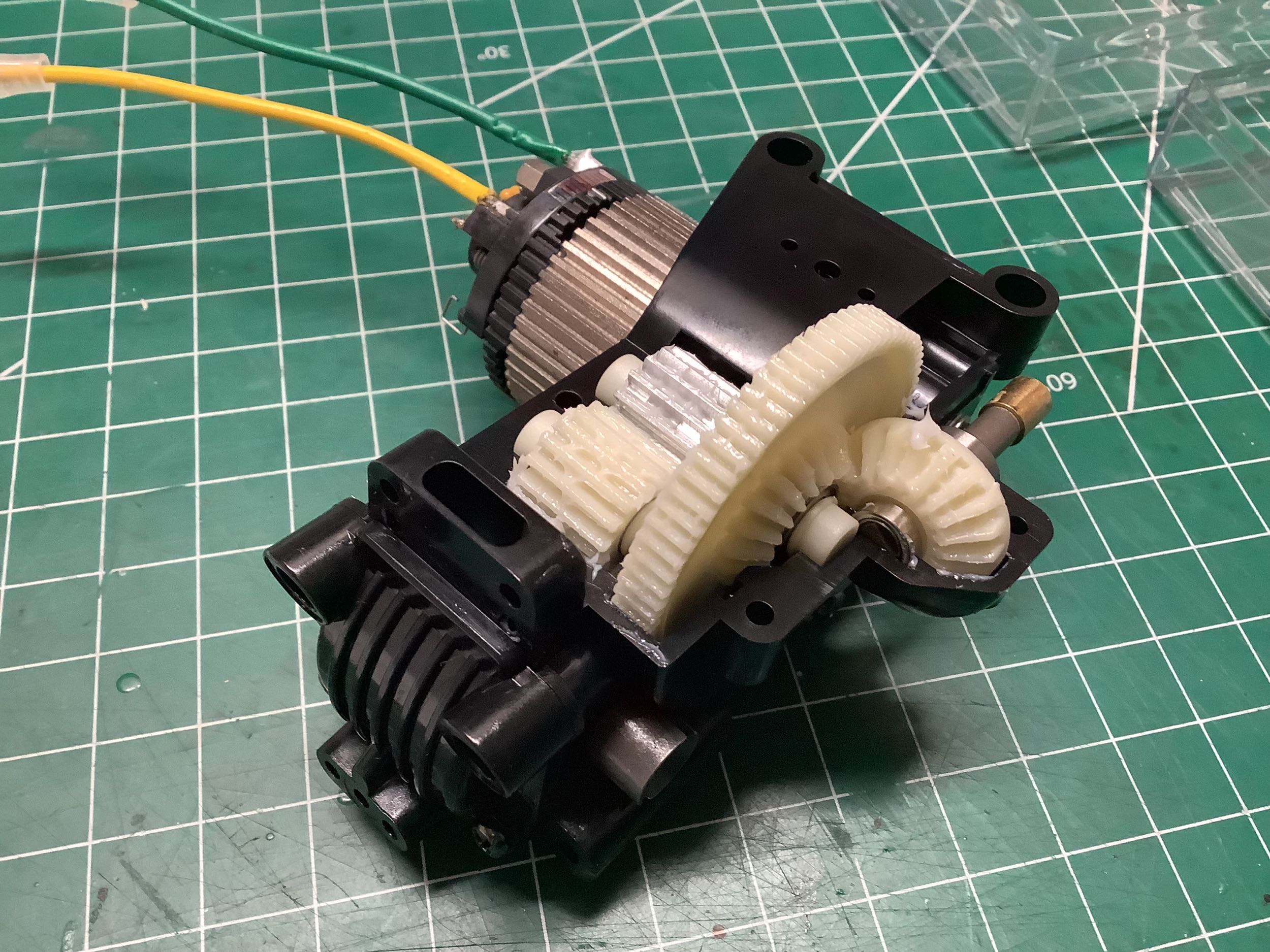
throughout. On the right I've completed the gear gearbox which
otherwise looks just like the Top Force. I've used a Dynatech 02H
motor that I'd been saving for a special occasion, and this is it.
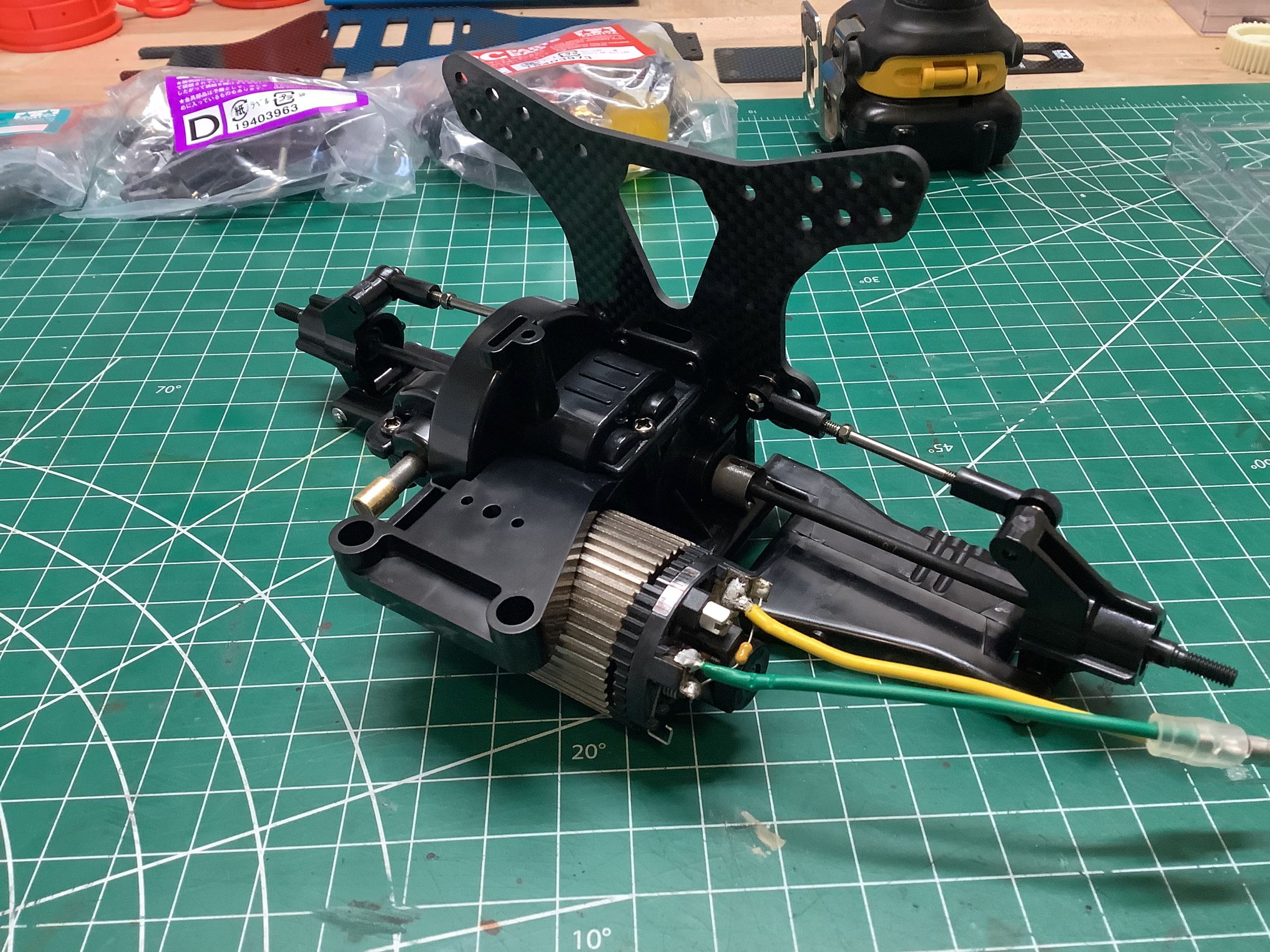
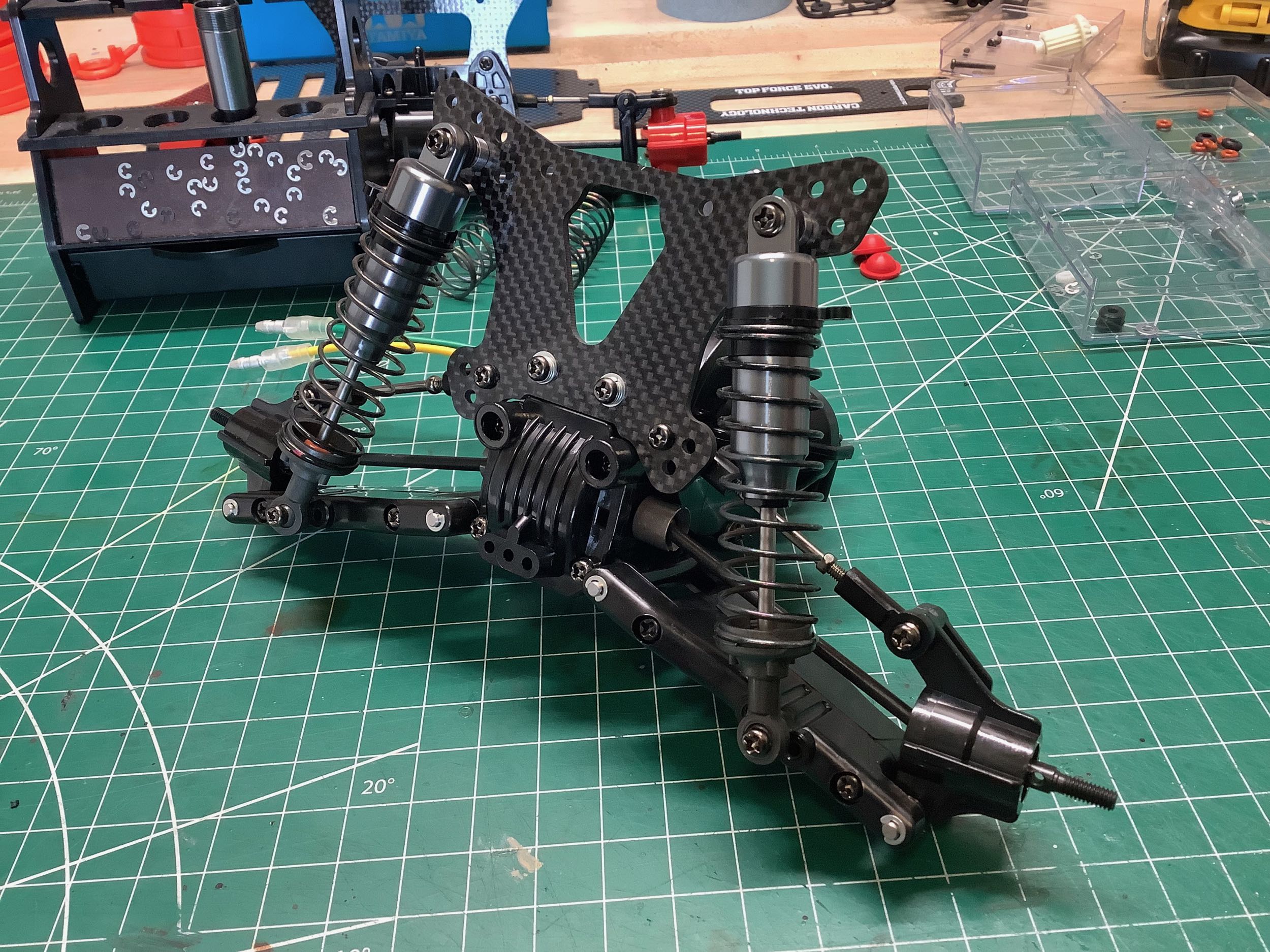
A couple of other differences are visible in the completed rear
suspension. The most obvious is the carbon shock tower replacing
FRP. The camber links are also now turnbuckles instead of threaded
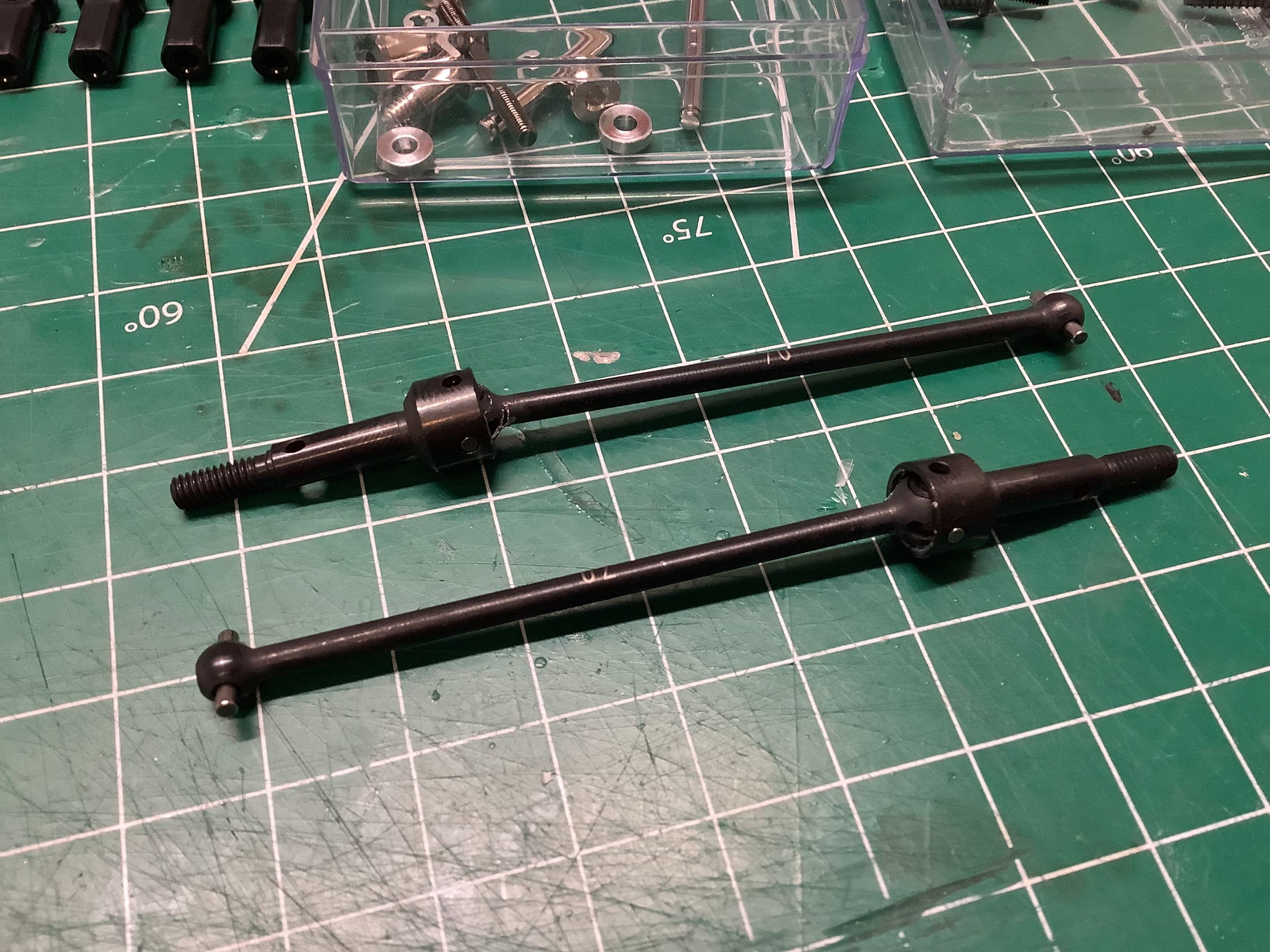
rods. The dogbone rear axles have also been replaced with
CVDs. The original Evolution used pre-assembled universal axles,
so the Evo is a step up.
The front gearbox comes with both the original solid counter gear and an
optional front one-way. Even though I don't really like one-ways,
I decided to build with that option just to take advantage of all the
design differences. The original Evolution also had a one-way, but
had no parts for a solid counter gear.
Like in the rear, we've switched to CVD axles, turnbuckles, and a carbon
shock tower. Besides switching to carbon, the new shock tower now
has a bridge spanning the two sides which makes it much stiffer than
the one on the Top Force.
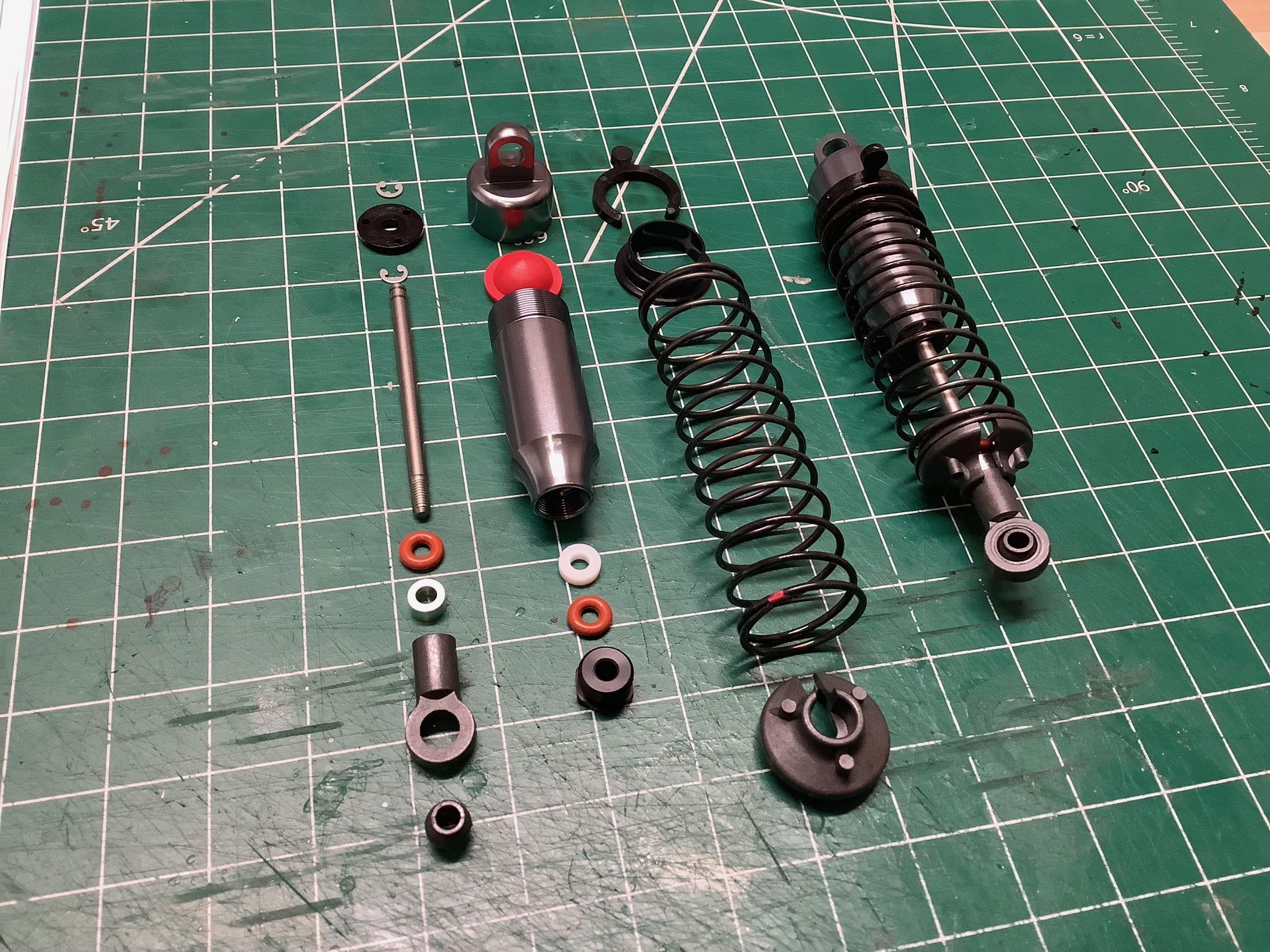
The most visible external change on the Top Force Evo is the addition of
these High Capacity aluminum dampers. They assemble as
shown. These are not the same as the 1992 originals. The
originals had the o-rings pre-installed in the rod end gland and they
could not be removed. The re-release changes to a more modern
design with a threaded end cap. The gray spring perch and rod end
(X-parts) are also from a newer 2006 parts tree from the TRF 501.
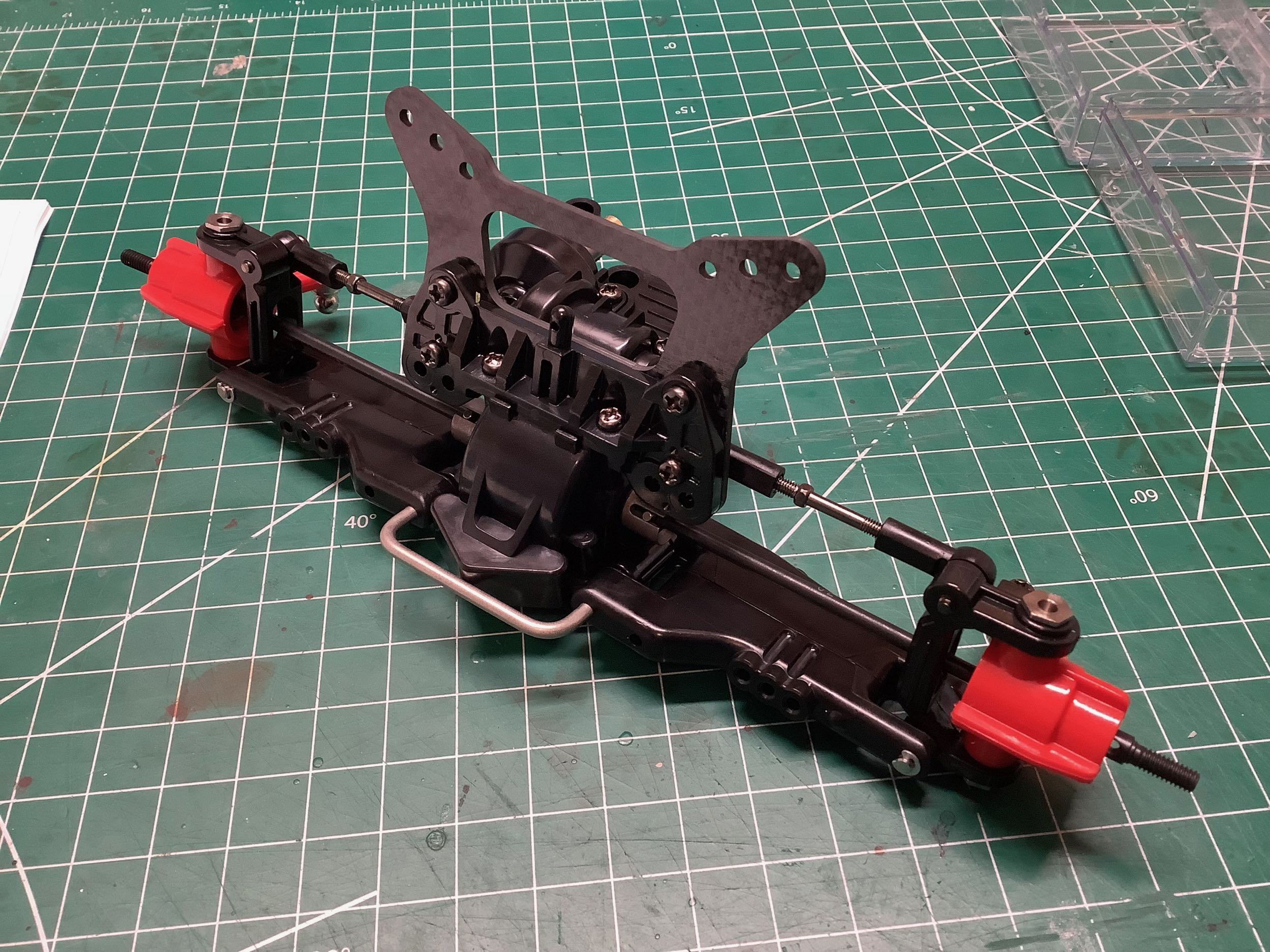
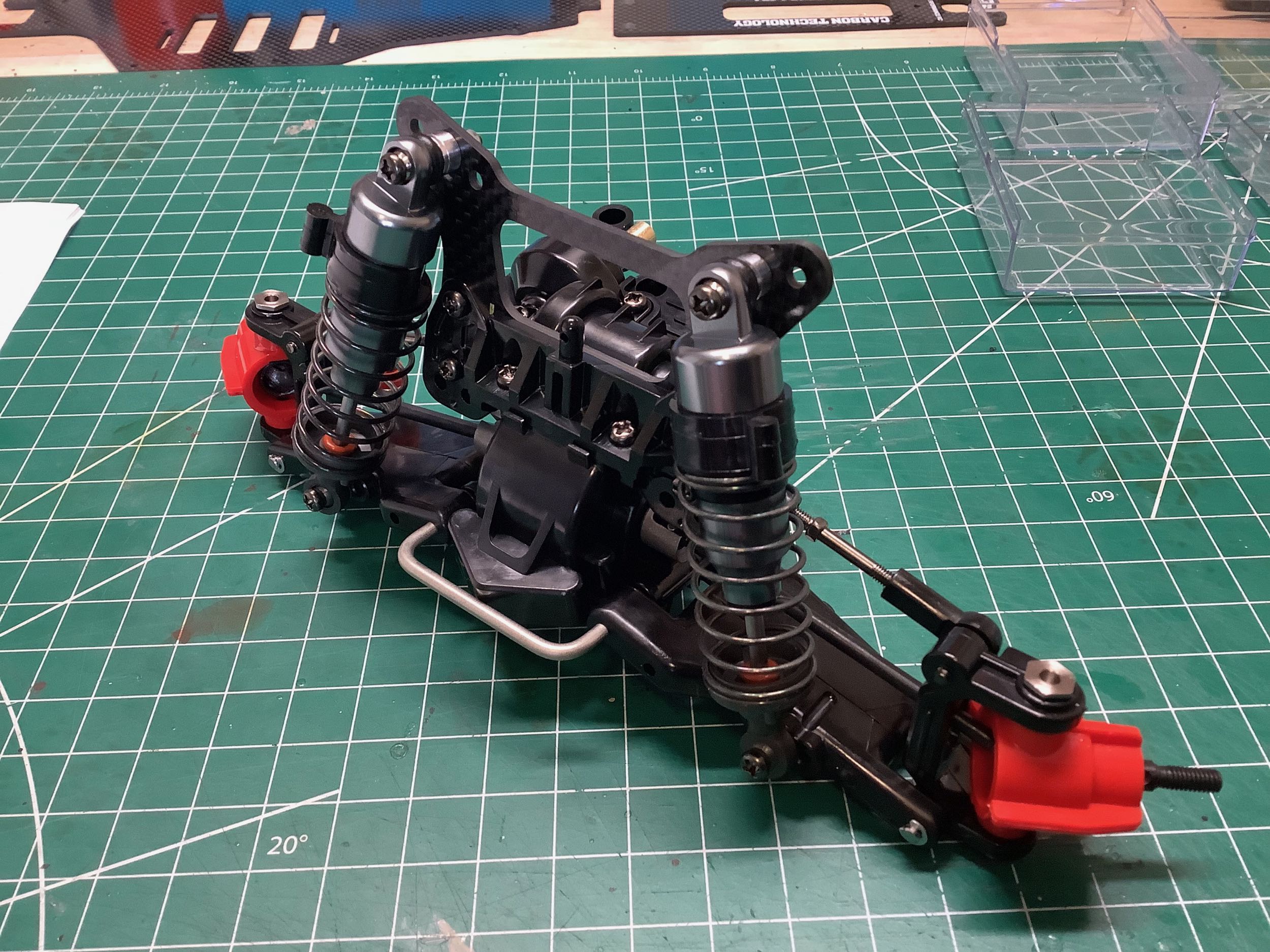
Here are the completed front and rear suspension and gearbox
assemblies. These are modular and can be completely assembled
prior to connecting them to the chassis.
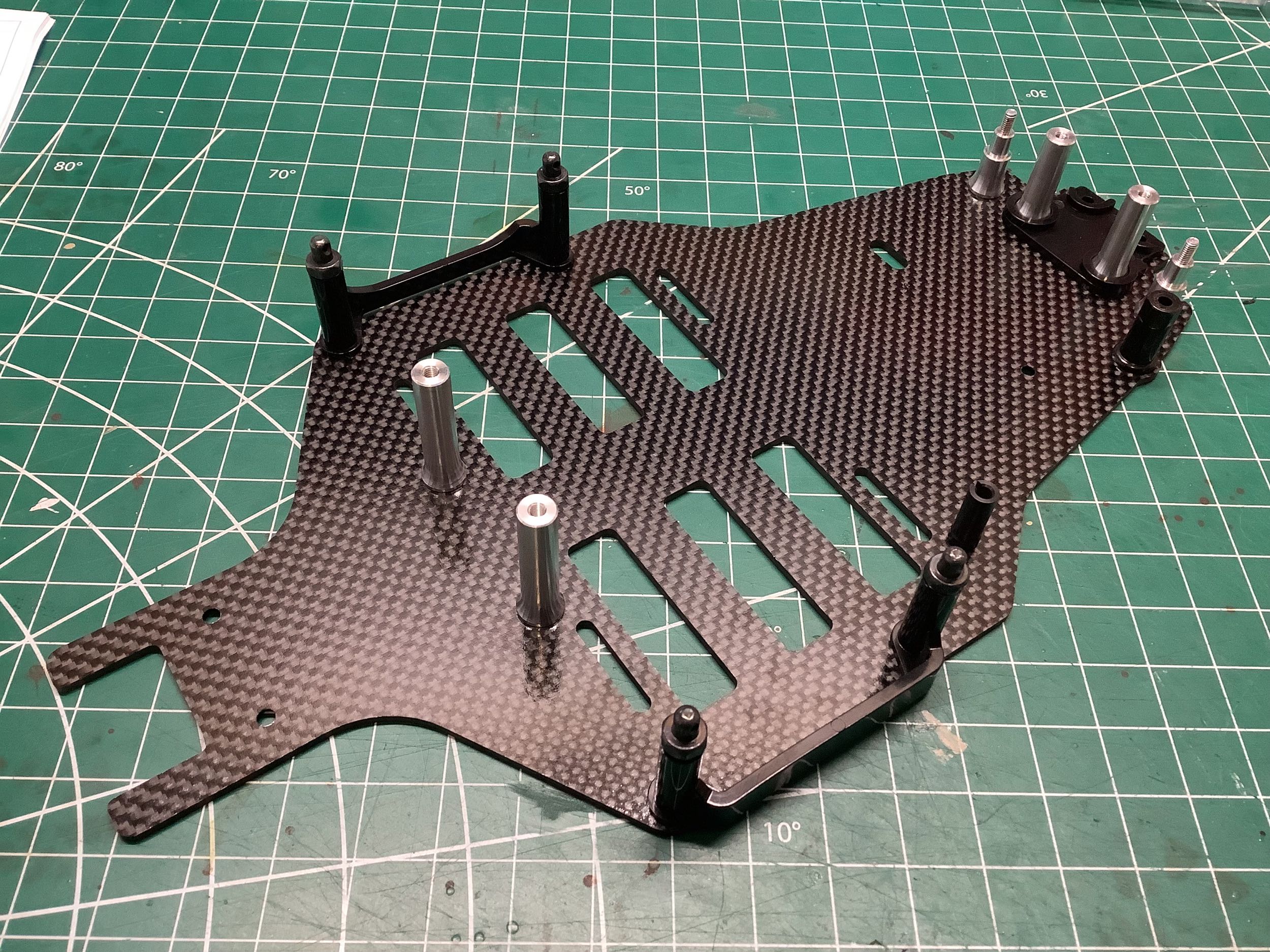
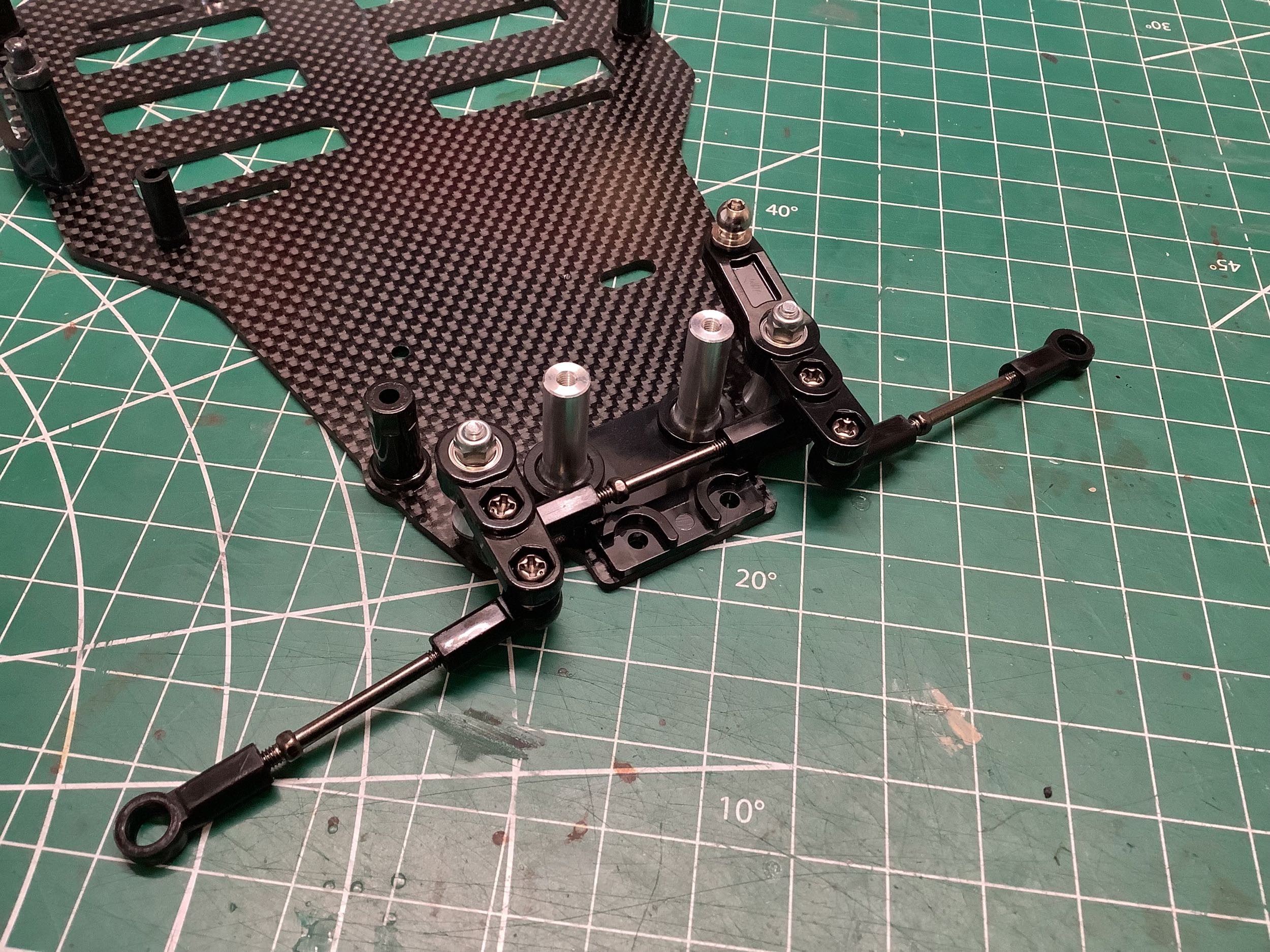
The Top Force Evo looks exactly like the Top Force here apart from the
carbon chassis. The dual bellcrank steering is common to both, but
the turnbuckles are new. In fact, from here on there are really
no further changes.
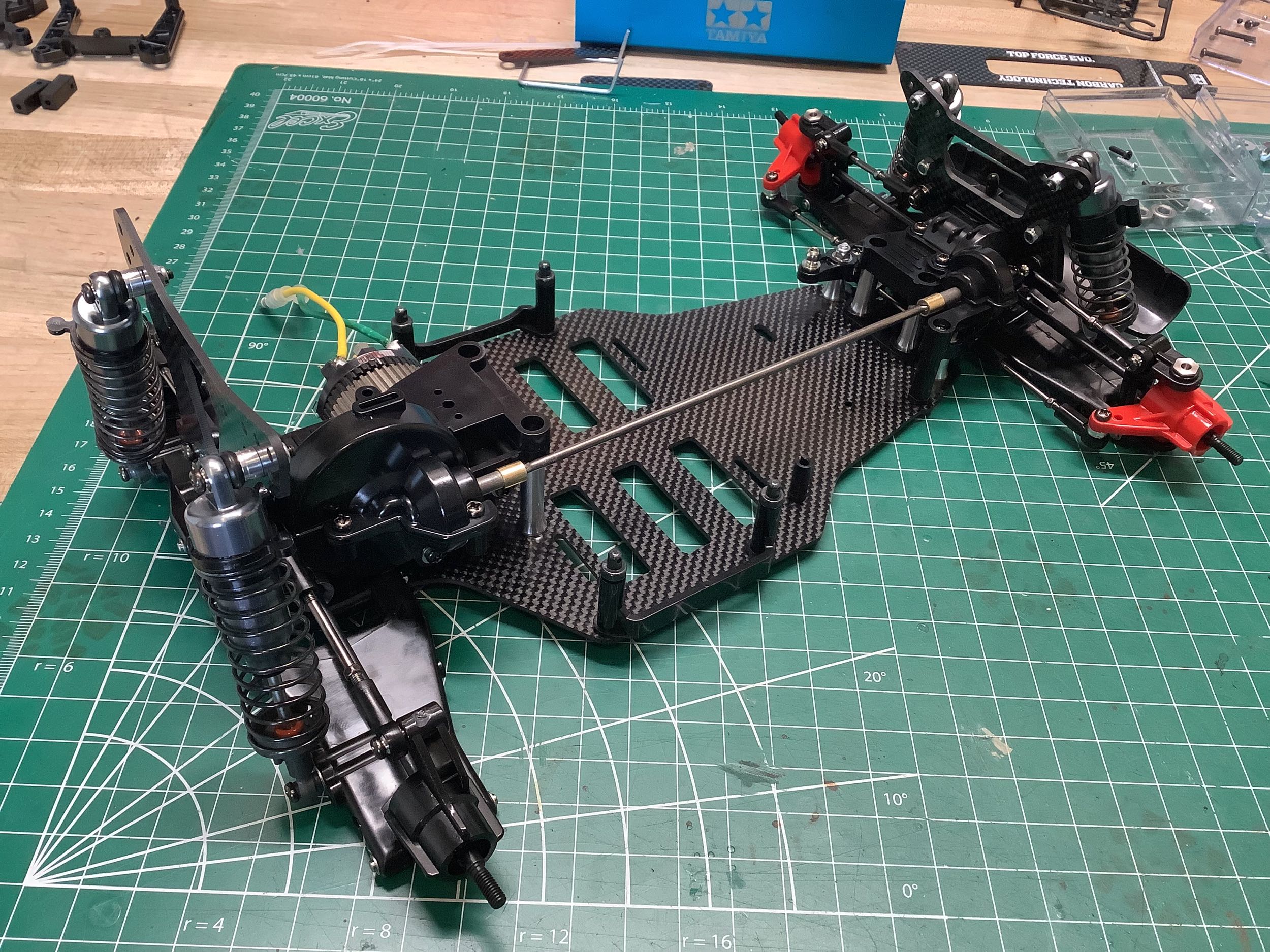
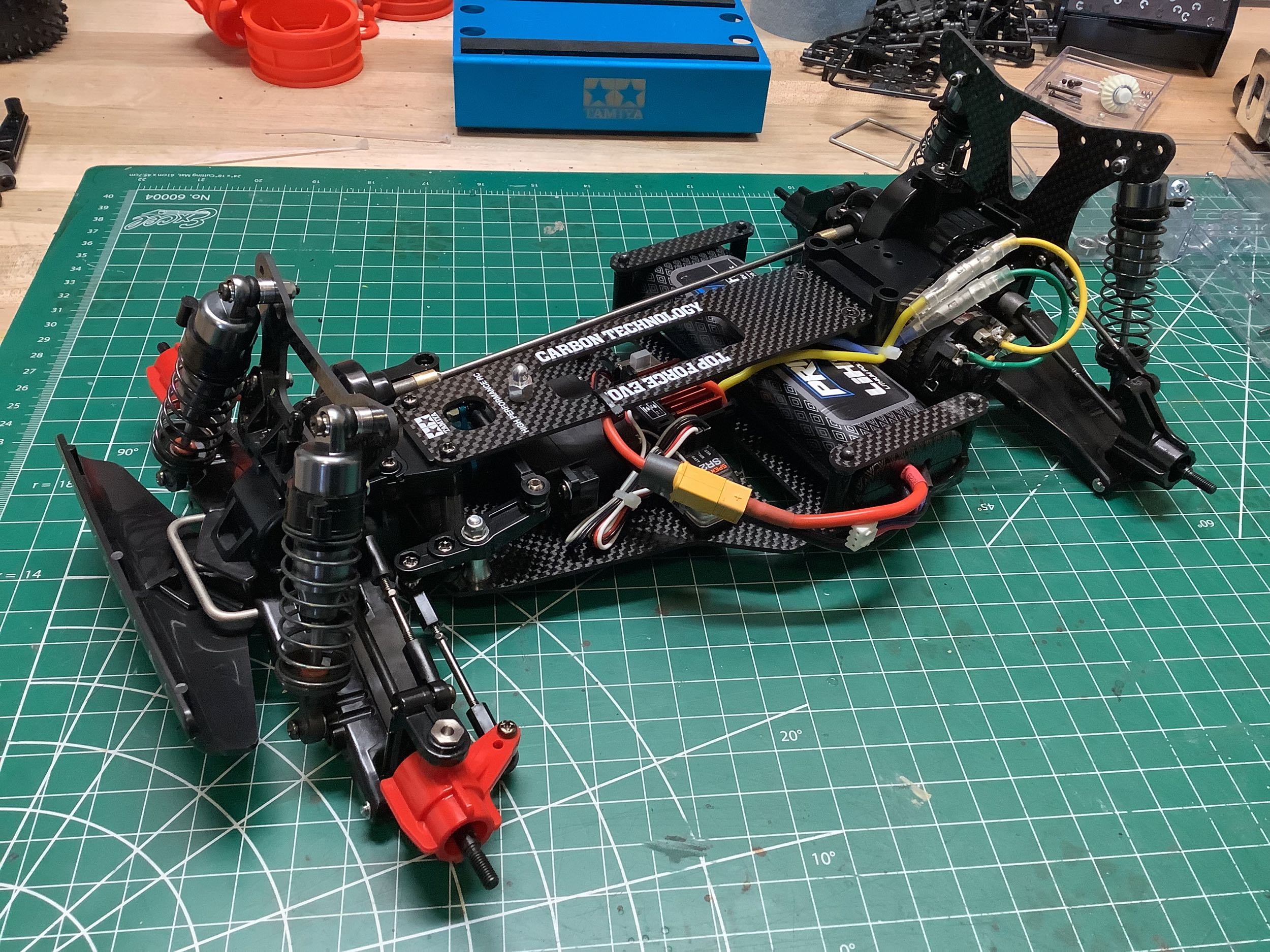
Now the suspension modules have been installed with the prop shaft
between them. The electronics and the top deck are the final
step. That's a pretty chassis. It's not at all obvious from
looking at it, but another major difference from the original Evolution
is that the Evo does not use titanium screws. I actually think
this was a good call because titanium screws are much weaker and softer
than steel. The weight advantage is seldom worth it unless you are
a hard core racer.
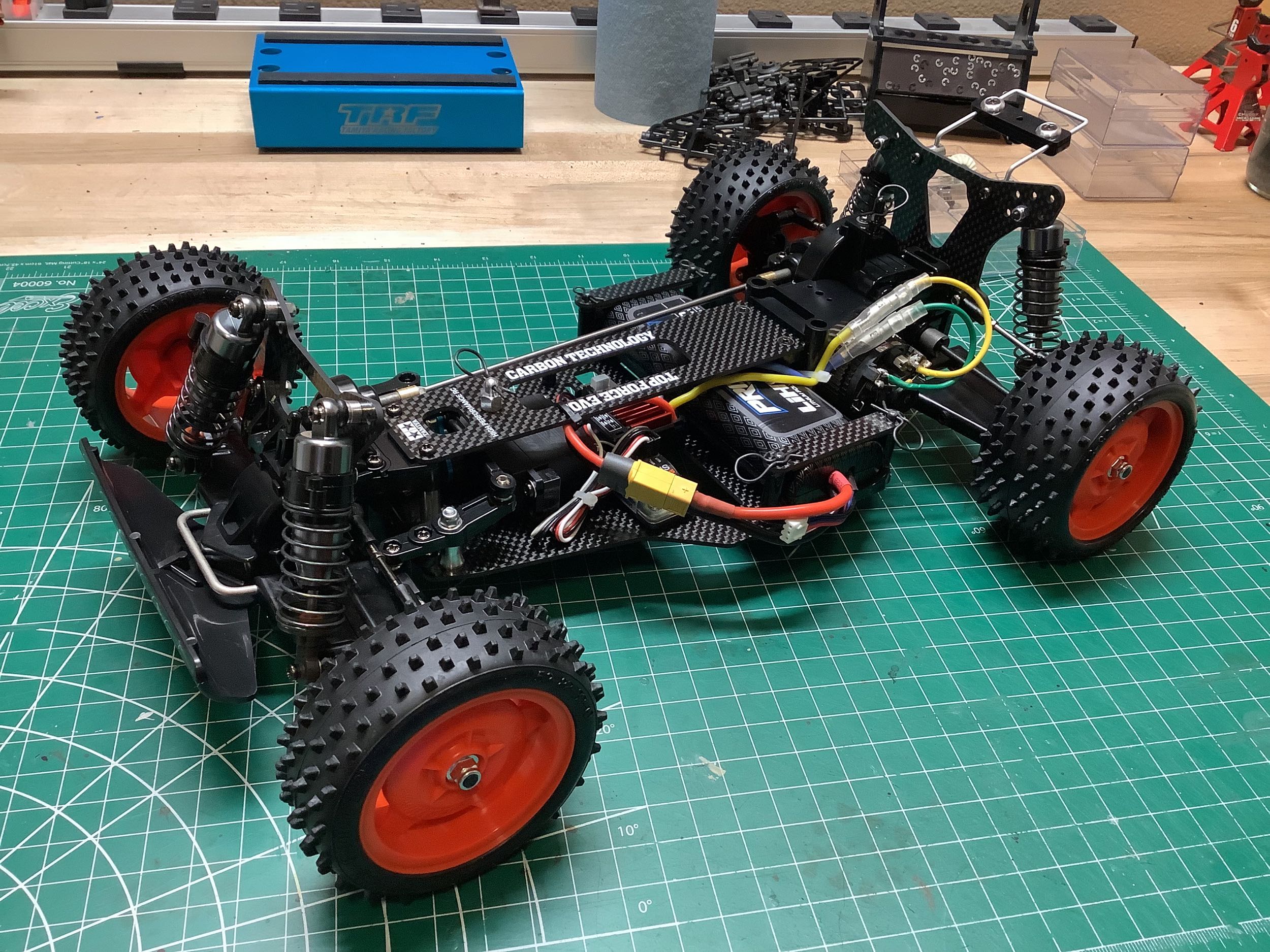
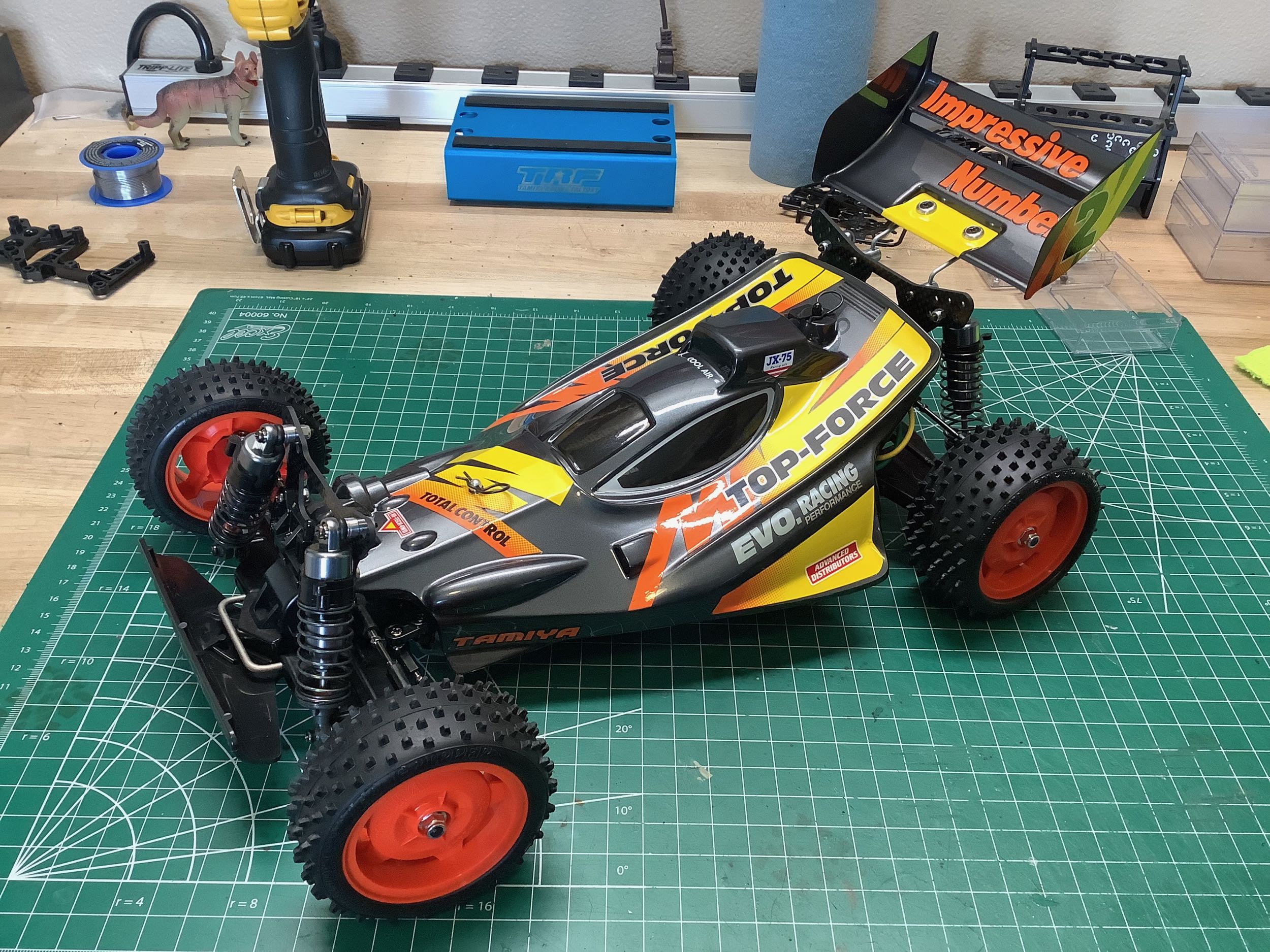
Here's the completed chassis with the unique orange wheels installed and the unfortunate square spiked tires.
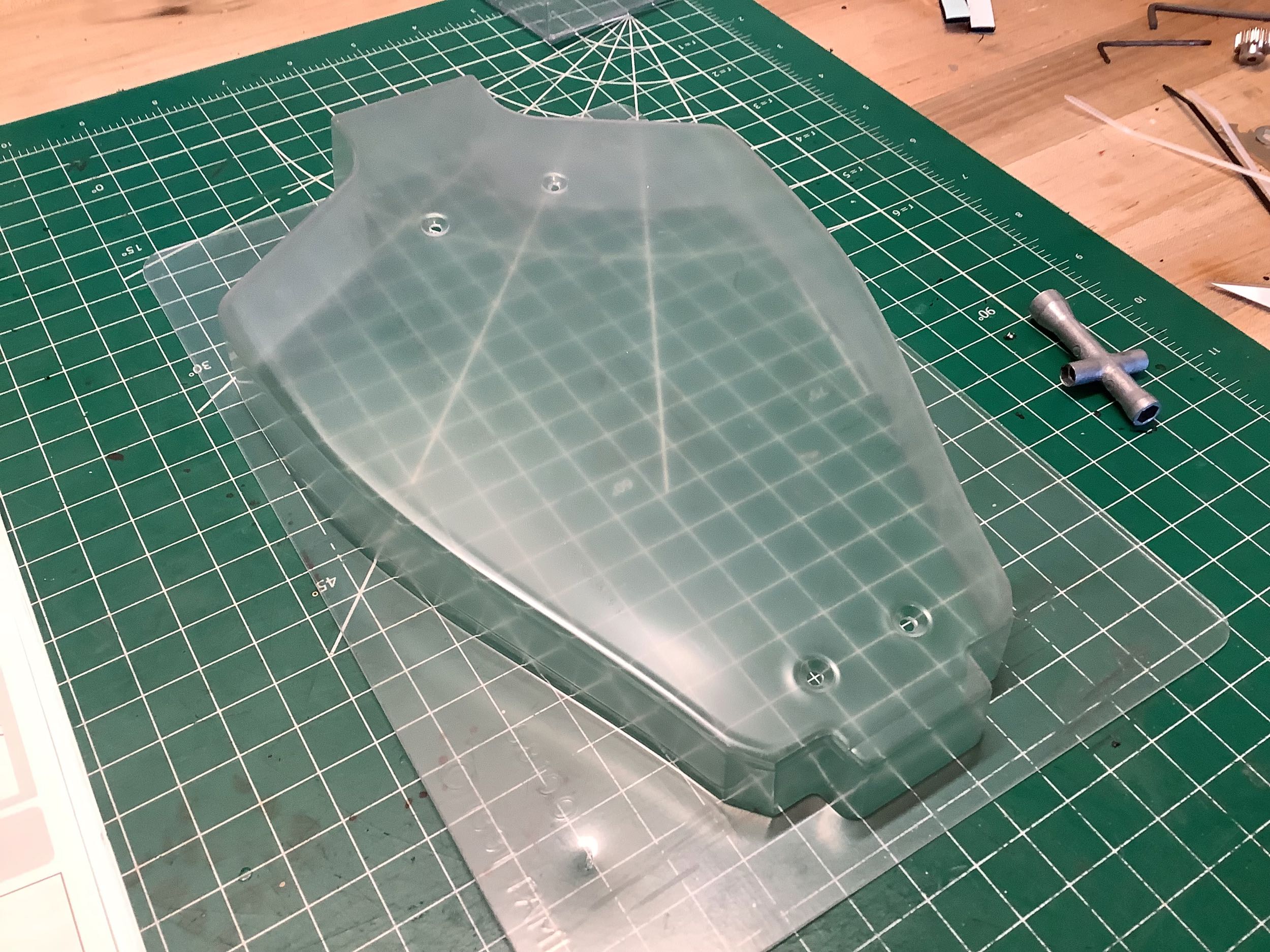
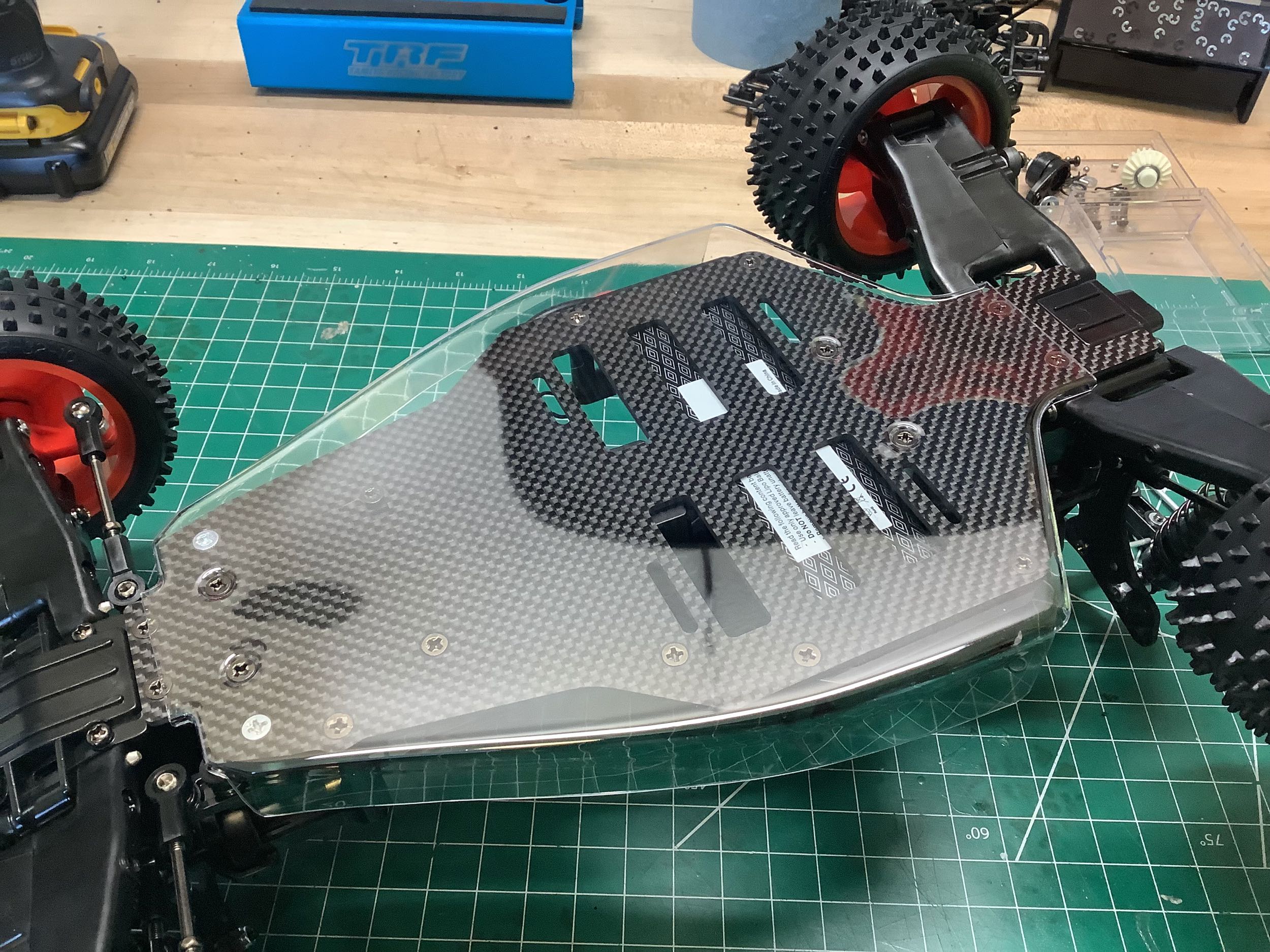
Although the body comes pre-cut, the under tray does not. I
trimmed it carefully and then left it clear to show off the carbon
chassis. This is correct per the manual. Not yet installed
are the Velcro strips which run along the sides to secure the body.
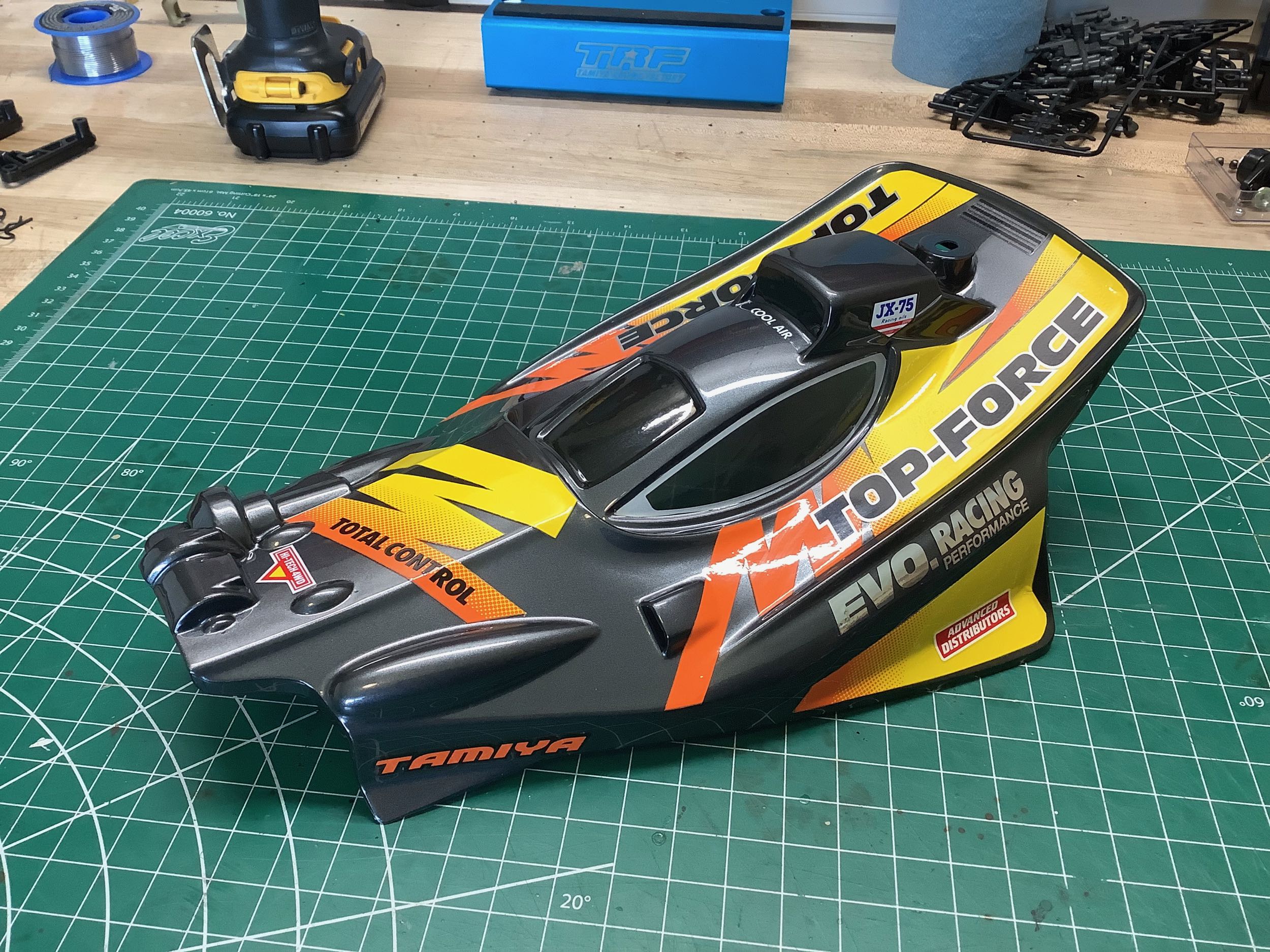
The body was already painted, cut, and ready to go so all I had to do
was install the stickers. I considered buying some aftermarket
stickers that said "Evolution" instead of "Evo", but decided against it.
©2026 Eric Albrecht